
 EN
EN
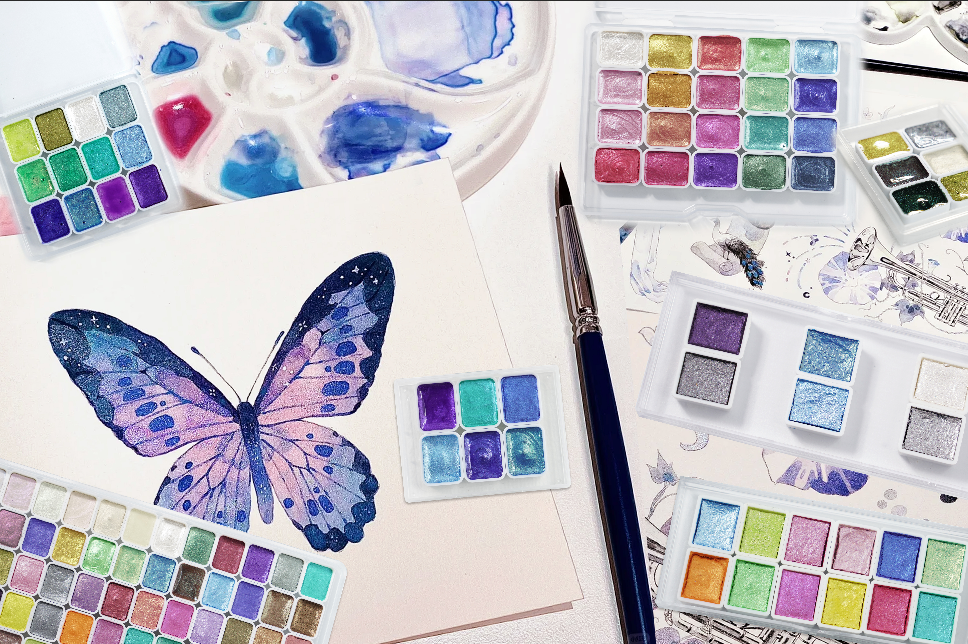
Why Stationery Brands Are Expanding into Professional Watercolor Paint
Strategic Shift: From Paper Goods to Pigment-Driven Brand Extensions
Stationery brands are diversifying into professional watercolor paint production to capture adjacent markets and leverage existing customer loyalty. This strategic pivot addresses three key growth drivers:
- Market expansion: Tapping into the $2.4B global art materials sector (Statista 2024) through complementary products
- Cross-selling potential: 68% of premium stationery buyers also purchase art supplies (NPD Group 2023)
- Inventory optimization: Shared raw material procurement—such as cellulose-based binders and sustainable packaging—reduces operational costs and streamlines supply chains
Brand Identity Alignment with Watercolor Paint Performance Standards
Premium stationery lines require watercolor paint formulations that mirror their core quality ethos. Professional-grade pigments must deliver:
- Consistent performance: ±3% batch variance in chroma intensity across production runs
- Lightfastness: ≥ ASTM II ratings (proven 50+ year fade resistance)
- Pigment load: Minimum 30% concentration for true color saturation
Leading manufacturers achieve this through micron-level pigment milling and ISO-certified quality control processes, ensuring artisanal results meet industrial-scale production demands. Exceeding these benchmarks correlates with a 23% higher price premium in the professional art materials segment.
OEM Watercolor Paint Requirements: Consistency, Scalability, and Compliance
Stationery brands expanding into professional watercolor paint face non-negotiable manufacturing standards. Unlike rebranding generic stock, true OEM partnerships demand rigorous protocols across three pillars: chromatic precision, scalable production, and regulatory adherence.
Batch-to-Batch Chroma & Lightfastness Uniformity (±3% Variance)
Most artists want their colors to match exactly when they replace old pans or tubes with new ones. Getting within about 3% difference in how intense the color looks (chroma) and how well it holds up over time (lightfastness) takes some pretty sophisticated tech. The manufacturers have to mix the pigments really thoroughly to stop them from clumping together during production. They also check the colors at several points throughout manufacturing using those fancy machines called spectrophotometers to make sure everything meets the ASTM D4303 standards. This whole process saves money on having to remix batches later on and keeps the brand's reputation intact, especially important for artists working on large series where consistency matters a lot.
MOQ Flexibility and Lead Time Realities for Launch-Phase Brands
Emerging brands need suppliers offering tiered minimum order quantities (MOQs), with some premium manufacturers accommodating batches as low as 500 units for custom formulations. However, lead times for specialized pigments—such as cadmium-free alternatives—may extend to 10–12 weeks. Strategic planning should account for:
- Phased inventory builds aligned with marketing launches
- Buffer stock for fast-moving hues
- Eco-certification processing (e.g., AP Seal, ACMI), which adds 3–4 weeks
Industry Insight: 78% of failed stationery extensions trace back to inconsistent pigment dispersion or unrealistic MOQ timelines during scale-up phases (Artist Materials Report 2023).
Selecting a True OEM Partner for Watercolor Paint Production
Beyond basic rebranding, stationery brands must scrutinize a manufacturing partner’s end-to-end capabilities to ensure quality and consistency. Reputable suppliers control every stage:
- Pigment Sourcing: Origin traceability guarantees ethical procurement and minimizes heavy metal contamination (<5 ppm)
- Milling Precision: Particle size distribution (typically 5–15 microns) directly impacts color brilliance and texture
- Formulation Expertise: Balanced binder-to-pigment ratios (15–30%) prevent cracking or bleeding
- QC Infrastructure: Automated batch testing for lightfastness (>ASTM IV) and chroma consistency (±3% variance) is essential
Evaluating End-to-End Capabilities (Pigment Sourcing → Milling → Formulation → QC)
Partner capabilities directly influence product performance. Brands should audit:
| Capability Tier | Limited (Rebranders) | True OEM Partners |
|---|---|---|
| Pigment Control | Third-party brokers | Direct mineral/organic sourcing |
| Milling Tech | Basic grinding | Nano-milling + particle analysis |
| R&D Investment | Stock formulations | Custom viscosity/pigment load R&D |
| QC Frequency | Spot checks | Per-batch ASTM/ISO testing |
Without integrated control, inconsistencies in watercolor paint emerge post-launch—costing brands 37% more in returns (Paints & Coatings Industry Report 2024). Prioritize partners documenting their vertical workflows.
Packaging, Form Factor, and Sustainability in Watercolor Paint OEM Programs
Metal Tins vs. Recycled Plastic: Shelf Impact, Cost, and Eco-Certification Trade-offs
When stationery companies start creating watercolor paint products, what they put those paints in really matters for how people see them and for the planet too. Metal tins definitely stand out on store shelves and keep colors safe from rust damage, which is great for quality control. But let's be honest about the cost side of things these metal containers need special molds that can run anywhere between fifteen thousand to twenty five thousand dollars depending on the design complexity. Then there are those plastic tubes made with recycled materials containing roughly thirty to fifty percent post consumer waste. They cut down on new resources needed by around forty percent, though many places still struggle with proper recycling systems for these items. Moving inventory closer to where customers actually live reduces carbon footprints during shipping by about thirty percent according to industry reports. And getting certified through programs like ISO 14001 helps back up all those green promises manufacturers make. Of course nothing comes without compromise here...
- Shelf Impact: Metallic finishes convey luxury but increase unit costs by 18% vs. matte plastic
- Compliance: PCR plastic requires batch testing for pigment interaction risks
- Scalability: Tins achieve cost parity at 10k+ units; plastic suits lower MOQs
- End-of-Life: 90% of metal tins enter recycling streams vs. 42% of plastic tubes (Circular Packaging Report 2023)
Balancing these factors ensures packaging aligns with brand values while meeting practical OEM constraints.
FAQ
Why are stationery brands expanding into the watercolor paint market?
Stationery brands are expanding into the watercolor paint market to tap into the growing global art materials sector, leverage cross-selling potential, and optimize inventory by using shared raw materials.
What makes professional-grade watercolor paints stand out?
Professional-grade watercolor paints are characterized by consistent performance, high lightfastness, and a high pigment load, all of which are essential for creating vibrant and durable artworks.
What should brands consider when selecting an OEM partner for watercolor paints?
Brands should consider the OEM partner's capabilities in pigment sourcing, milling precision, formulation expertise, and quality control infrastructures to ensure quality and consistency in their watercolor paints.
How do packaging options affect watercolor paint product perception?
Packaging options like metal tins convey luxury and durability, but can be costly, whereas recycled plastic offers a sustainable option with cost advantages, particularly for lower MOQs.