
 EN
EN
Introduction: Where Safety and Creativity Meet
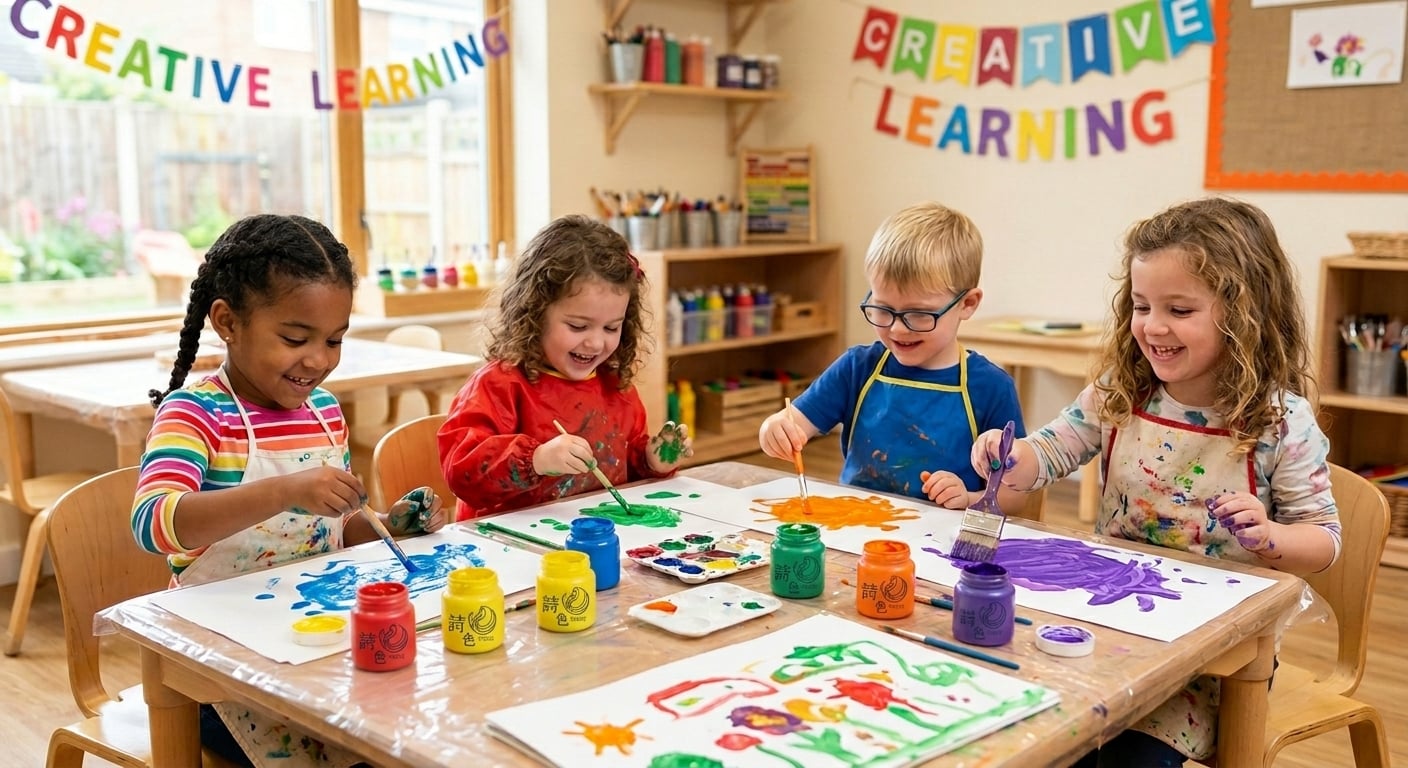
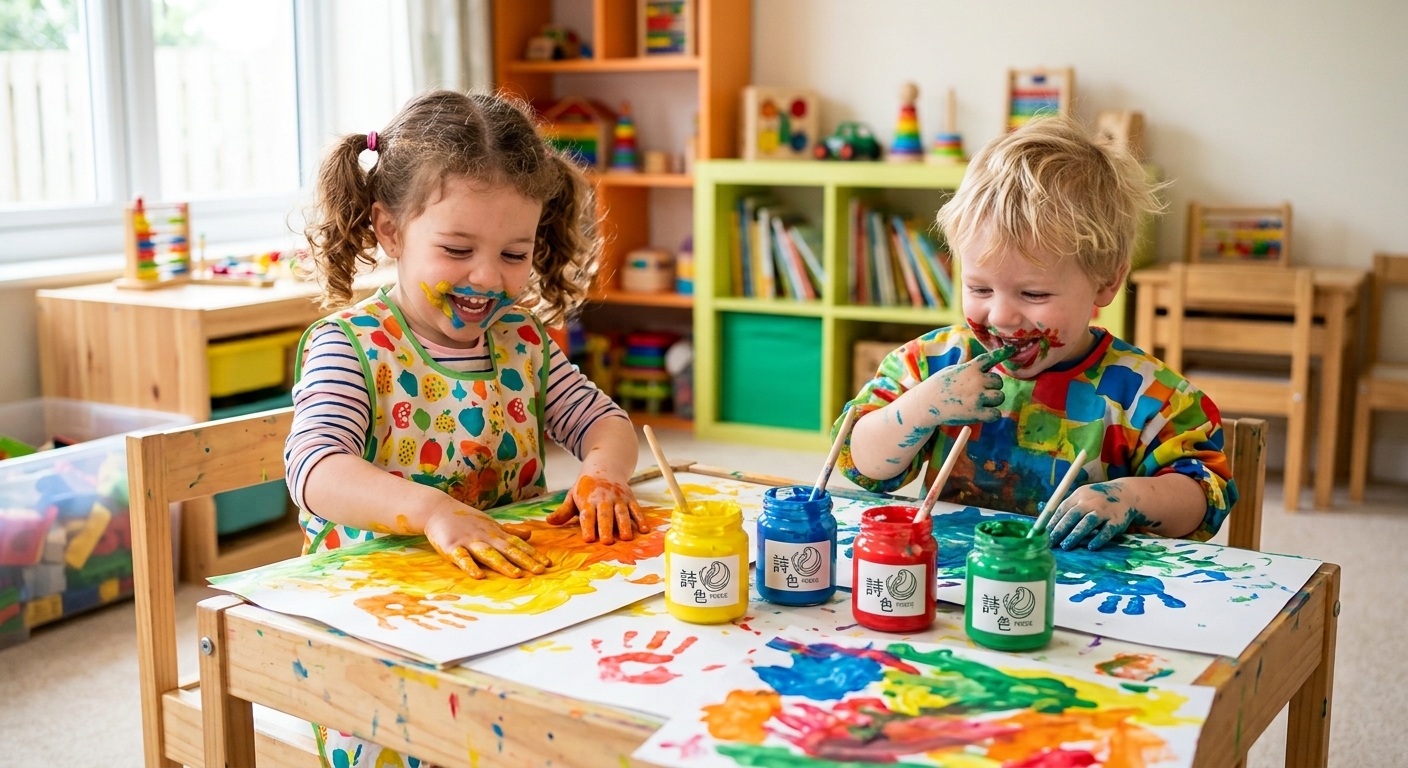
Paint is an essential tool in children's artistic development. However, the natural tendency of young children to explore the world through their mouths raises concerns among parents and educators about traditional paints, which may contain heavy metals, organic solvents, and other harmful ingredients. Therefore, developing "edible-grade" children's paint is not only a market demand but also a rigorous endeavor involving food science, materials science, and fine chemical engineering. This article offers a professional perspective on the design philosophy, core formulations, and key production considerations for edible children's paints.
1. Pigment Selection: Balancing Natural and Synthetic Options
The core of any paint is its colorant. Based on their origin, food-grade colorants fall into two categories: natural pigments and synthetic pigments.
- Natural pigments: Derived from plants, animals, or microorganisms (e.g., anthocyanins and carotenoids extracted from fruits and vegetables). Advantages include high safety and natural hues; disadvantages include poor stability (affected by pH, light, and temperature) and weaker tinting strength.
- Synthetic pigments: Chemically synthesized (e.g., Brilliant Blue, Sunset Yellow). Their strengths lie in vibrant colors, stable properties, and low cost. When used within the limits specified by Chinese national standards (GB 2760), they are safe.
Professional Recommendation
For products targeting very young children (e.g., ages 1–3), natural pigments are preferred for maximum safety. However, their stability should be improved through microencapsulation or the addition of color protectants. For children over 3, synthetic pigments that comply with national standards offer an effective balance of safety and color performance.
2. Formulation and Process Innovation: From Simple DIY to Industrial Standards
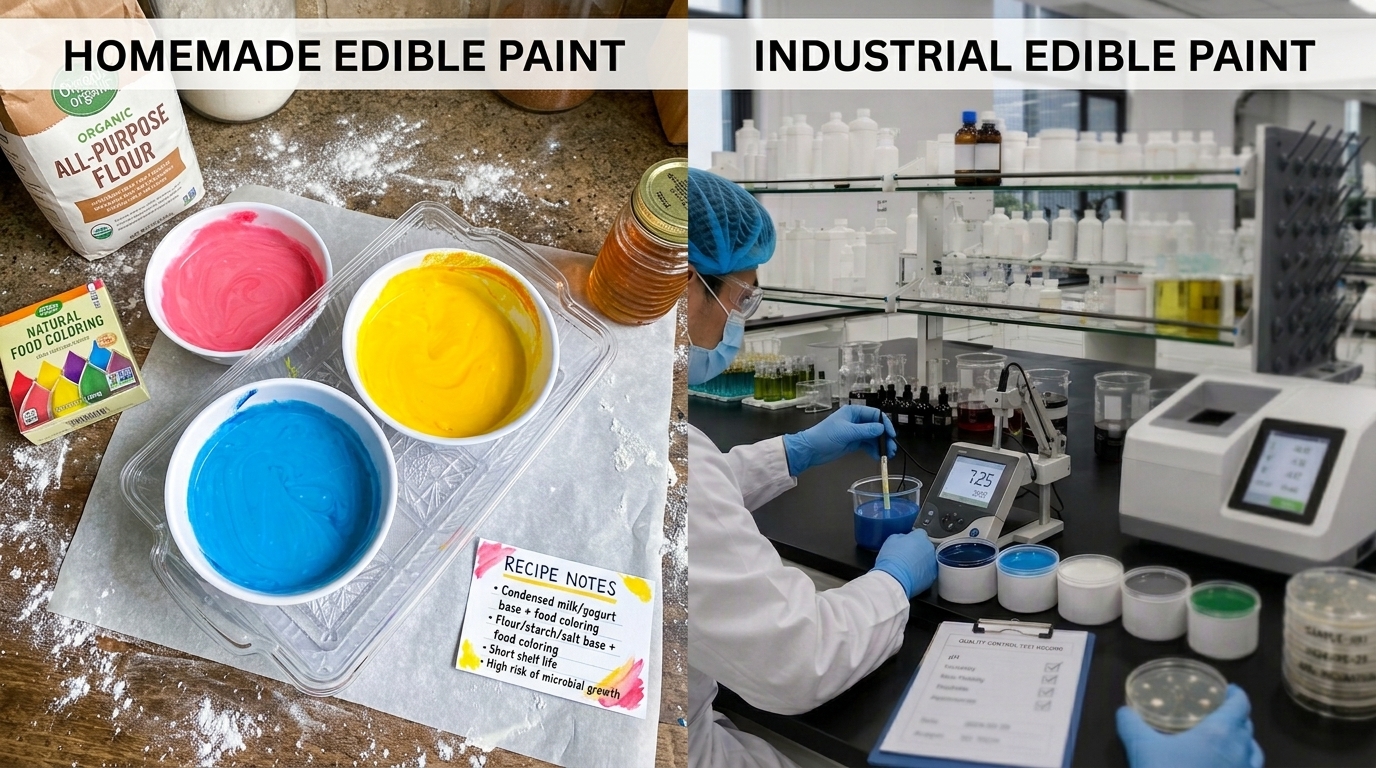
The development of edible children's paints follows two pathways: simple home recipes and patented industrial formulations.
Pathway 1: Home/Simple Formulations
These emphasize easily accessible ingredients and are suitable for handcrafting, but often suffer from short shelf life and microbial growth.
- Condensed milk/yogurt base: Uses condensed milk or natural yogurt as the matrix, mixed with food coloring. Advantage: palatable texture, ideal for food art.
- Flour/starch base: Mixes flour, water, and salt with food coloring to create "puffy paint." Low cost; produces a three-dimensional effect when dry.
- Natural fruit/vegetable powder base: Attempts to mix ingredients like dragon fruit powder or purple sweet potato powder with edible plaster to create "colored chalk." While natural, this approach suffers from poor color rendering and a high risk of mold growth in humid conditions.
Pathway 2: Industrial Standard Formulations (Patent-Referenced)
For large-scale production and product stability, formulations require scientific design. Below is an analysis of a patent-based edible paint formulation for children:
| Component | Function | Reference Ratio (parts by weight) | Common Raw Materials |
|---|---|---|---|
| Aqueous phase | Solvent and color carrier | Approx. 70–85 | Deionized water |
| Oil phase | Provides matrix and moisture retention | Approx. 7–14 | White mineral oil, higher fatty alcohols (e.g., stearyl alcohol) |
| Colorant | Imparts color | 0.5–4.0 | Food-grade colorants compliant with national standards |
| Emulsifier | Stabilizes the water-oil system | 1.0–5.0 | Glyceryl monostearate, Span-60, Tween-60 |
| Thickener/Stabilizer | Adjusts rheology, prevents sedimentation | 1.0–4.0 | Polyvinylpyrrolidone (PVP K-85), glycerin |
| Preservative | Inhibits microbial growth | 0.1–0.5 | Potassium sorbate (safe and efficient food-grade preservative) |
Core Production Process
Based on relevant patents, the industrial preparation typically involves the following key steps:
- Oil phase preparation: Heat white mineral oil, higher fatty alcohols, oil-soluble emulsifiers, and preservatives to 60–70°C while stirring until fully dissolved.
- Aqueous phase preparation: Heat deionized water, add glycerin, PVP, water-soluble emulsifiers, and food coloring. Maintain temperature and stir until uniformly dissolved.
- Emulsification and homogenization: Under high-speed stirring, slowly add the aqueous phase to the oil phase, maintaining the temperature at 60–70°C for emulsification. This step determines the fineness and stability of the paint's texture.
- Cooling and filling: After uniform emulsification, cool to room temperature with continuous stirring to obtain the finished paste.
3. Critical Quality Control Points in Production
- Microbial control: Edible ingredients are nutrient-rich and highly susceptible to bacterial growth. Production environments require strict disinfection, water must be deionized, and food-grade preservatives (e.g., potassium sorbate) must be added.
- pH and stability: Particularly when using natural pigments, the system's pH must be monitored to prevent color change or precipitation.
- Taste and odor: Since the product is "edible," if a child inadvertently ingests a small amount, the formulation should consider palatability. Patent formulations use tasteless matrices such as white mineral oil and may include food-grade flavors to improve taste, though potential allergens from flavors should be noted.
Conclusion
Producing edible children's paint is essentially about finding the optimal balance between "absolute safety" and "user experience." It requires manufacturers to possess expertise in both food additive regulations and colloidal chemistry/rheology. By carefully selecting pigment types, optimizing emulsification systems, and strictly controlling quality variables, companies can deliver inspiring, safe art products that give parents complete peace of mind.