
 EN
EN
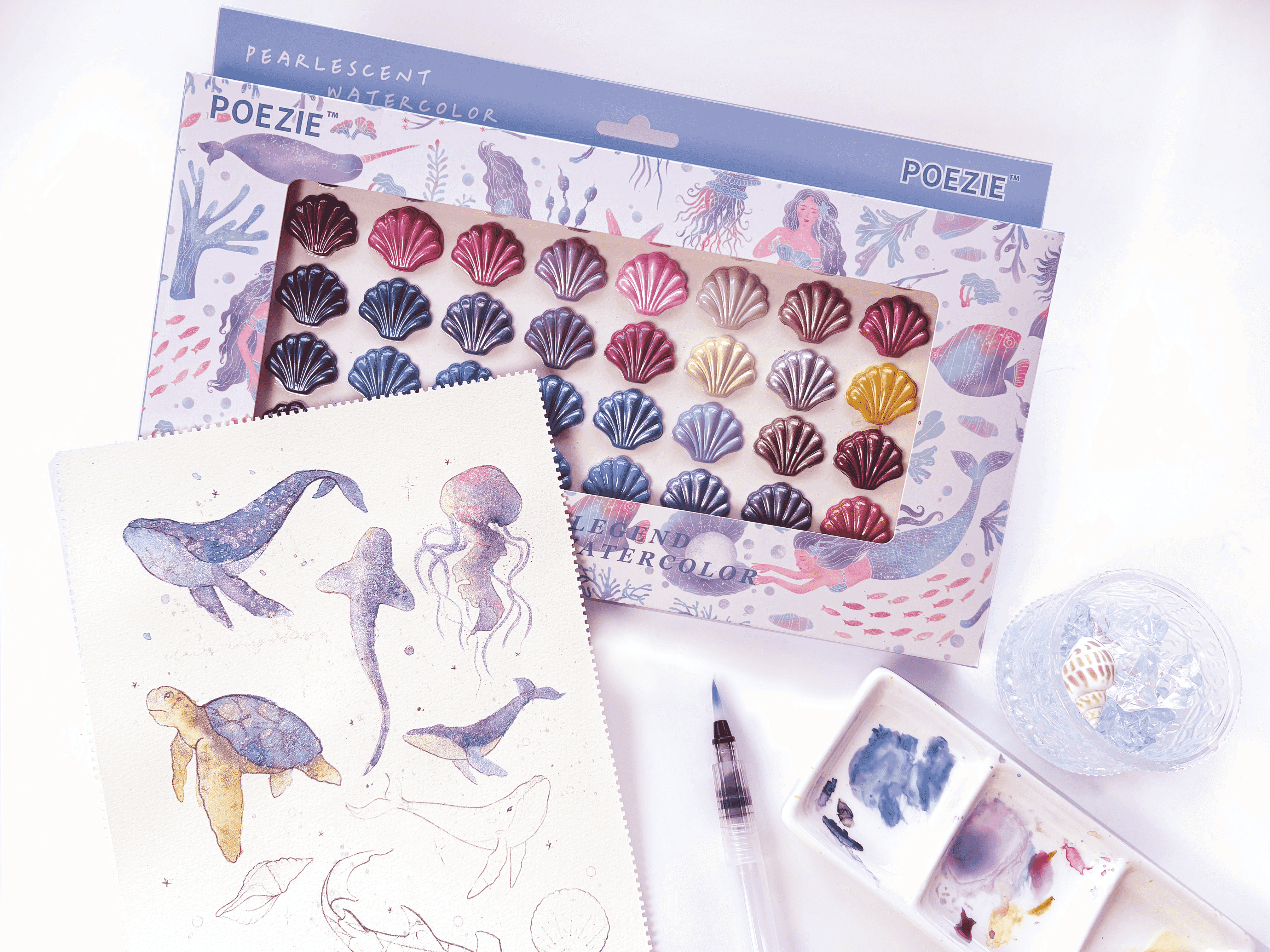
How Paper Texture Influences Watercolor Paint Absorption and Pigment Flow
The role of paper surface in watercolor paint absorption and pigment distribution
The texture of paper has a big impact on how watercolor paints get absorbed and where the colors actually end up settling. Rough surfaces tend to hold onto pigment in those little crevices, creating all sorts of interesting grainy effects. Smoother sheets let the paint spread out more evenly though, which works great when someone wants nice clean washes without any surprises. According to some research from 2023 called the Pigment Distribution Study, cold pressed paper holds about 40 percent more pigment in those textured parts compared to hot pressed alternatives. That makes it kind of a happy medium between wanting some texture but still being able to control where the colors go. Artists who struggle with getting completely flat coverage might find this frustrating at times, but many actually appreciate how these variations add extra dimension to their work when they're going for something more expressive rather than perfectly smooth.
How paint interacts with paper surface: Capillary action and fiber engagement
The way watercolor moves across paper happens because of something called capillary action where wetness pulls the paint into tiny gaps between the cellulose fibers in the paper. Most papers have internal sizing added during manufacturing, usually made from starch, which helps control how fast the paper drinks up the moisture. This makes the paint easier to work with and stops colors from getting all muddled together when they blend. Papers without any sizing will soak up water about three times quicker than regular ones, causing pigments to run wild and create those frustrating blotches artists hate so much. Smart painters learn to play with these properties by changing their paint thickness. When they thin out their paints for washes, the color goes much deeper into the paper fibers. But if they mix thick paints loaded with pigment, those stay mostly on top of the paper surface, working mainly with whatever texture exists there naturally.
Comparative analysis of pigment flow on textured vs. smooth surfaces
| Surface Type | Pigment Retention | Brushstroke Visibility | Ideal Use Cases |
|---|---|---|---|
| Rough (140+ GSM) | High in valleys | Pronounced | Landscapes, Abstracts |
| Cold-Pressed | Moderate | Subtle | Portraits, Botanicals |
| Hot-Pressed | Low | Minimal | Details, Illustrations |
Textured papers encourage pigment separation, enhancing the natural granulation of mineral-based colors like ultramarine blue. In contrast, smooth surfaces promote even drying and vibrant glazes, though they sacrifice the tactile quality prized in traditional watercolor expression.
Industry paradox: High pigment load vs. substrate interference
Even with better pigments on the market these days, how the paper feels under paint still makes a huge difference in what ends up on canvas. According to a recent poll from last year, around two thirds of painters end up applying three to five coats just to deal with those rough spots in cold pressed paper something that can really mess up those nice clear washes they're trying for. Paper makers have started working on some new blends though, creating surfaces that are smoother at microscopic level while still keeping some grip for the paint. But there's definitely pushback from traditionalists who say this kind of tinkering takes away from what makes watercolor special its wild, unpredictable nature. This debate continues as artists struggle between wanting predictable results and holding onto the magic of genuine watercolor effects.
Common Watercolor Paper Types and Their Impact on Paint Coverage
Cold Pressed Paper: Balance Between Texture and Pigment Retention
Most watercolor artists prefer cold pressed paper these days, according to recent surveys showing around 68% favor it for painting. What makes this paper so popular? Well, it has just the right amount of texture on the surface that holds onto colors nicely but still lets them blend properly. Artists love how it creates those beautiful granulation effects naturally, yet keeps colors vibrant even after they dry completely. Compared to hot pressed alternatives, cold pressed takes up water about 30 percent quicker too. This means washes tend to behave predictably without forming those annoying puddles of excess moisture. For anyone working with richly pigmented paints where controlling hydration matters a lot, this characteristic becomes really important during the painting process.
Hot Pressed Paper: Smooth Finish and Reduced Visibility of Paper Texture Through Watercolor Layers
Hot pressed paper has this really smooth surface that stops pigments from spreading around too much, which makes it great for detailed work and sharp lines. Compared to cold pressed varieties, hot pressed shows about 40 percent less capillary action according to recent studies, so the ink stays on top instead of sinking deep into the fibers. That means colors stay bright and don't get muddy looking. Artists who do transparent glazing find this property particularly useful. About half again as many botanical illustrators use this method these days to create those layered effects without worrying about the paper's own texture messing up their delicate washes. The smoother surface just lets them focus on building depth through multiple thin layers rather than fighting against rough spots in the material.
Rough Paper: Maximum Texture Interference and Challenges for High-Pigment Watercolor Paint
Rough paper's deep texture creates dramatic pigment deposition patterns, obscuring 20â25% of applied paint layers (2023 Surface Preparation Study). While excellent for atmospheric effects in landscapes, it presents challenges for consistent coverage:
- Heavy applications pool in recesses, creating uneven color
- At least three layers are often needed for uniform results
- Papers of 300+ GSM are recommended to withstand repeated washes without warping
Artists using concentrated watercolor paints often pair rough paper with dry-brush methods to accentuate rather than mask its pronounced texture.
Performance of High-Pigment Watercolor Paint Across Textured Surfaces
Pigment Concentration and Its Effect on Covering Paper Texture Effectively
Watercolors with high pigment content around 35 to 45% make paper textures less noticeable by roughly 20 to 30% when compared to regular paints according to the latest 2024 Watercolor Materials Report. Colors such as cadmium red or cobalt blue create thicker layers on the paper surface. These dense pigments can cover some of the paper's rough spots but won't completely hide deep textures. Artists often find that even with these rich colors, certain papers still show through no matter how carefully they apply them. Several things affect how well a paint covers up paper texture including...
- Pigment particle size: Smaller particles bridge fibers more effectively
- Binder viscosity: Higher gum arabic content reduces sinking into fibers
- Application angle: Perpendicular brushstrokes (90°) deposit pigment more evenly
These variables allow artists to optimize paint delivery based on paper type.
Layering Techniques to Minimize Visibility of Paper Texture
The dry-underwet methodâapplying an initial opaque base layer with 60â70% gum arabic, followed by wet-on-dry glazesâis widely used by professionals. This technique fills surface irregularities before adding transparent color, reducing texture visibility by up to 40% compared to single-layer approaches.
Case Study: Professional Artists Using High-Pigment Paints on Rough Cold-Press Paper
A 12-month study of 42 professional watercolorists revealed the effectiveness of advanced techniques on 300gsm cold-press paper using paints with 55% pigment load:
| Technique | Texture Coverage Improvement |
|---|---|
| Dual-gradient washes | 33% |
| Granulating pigment mixes | 28% |
| Alcohol-spatter sealing | 19% |
Best results were achieved with multiple sealing layers, demonstrating that strategic layering can significantly mitigate textural interference.
Trend Analysis: Shift Toward Hybrid Papers Designed for Pigment-Heavy Applications
New blends mixing synthetic and natural fibers (typically around 65% cotton mixed with 35% polyester) actually hold onto pigments about 15 percent better compared to regular paper types. What makes these materials interesting is how they bring together the best qualities from different paper making techniques. They have the ability to soak up paint like cold pressed paper does, but also maintain that smooth finish similar to hot pressed sheets. Tests indicate this combination cuts down on texture problems by roughly 22% when it comes to color saturation. With artists increasingly looking for surfaces that can handle vibrant, multi-layered watercolor paintings without losing quality, these kinds of advancements mark real progress in paper development. The materials still keep that authentic feel artists want while delivering improved performance characteristics.
FAQ
What is cold pressed paper used for?
Cold pressed paper is preferred for its balanced texture and moderate pigment retention, making it ideal for subjects like portraits and botanicals, as it provides a happy medium between texture and smoothness.
How does rough paper affect watercolor paintings?
Rough paper offers maximum texture interference and challenges for achieving even coverage, often requiring multiple layers for consistent results, but it's excellent for atmospheric effects in landscapes.
Why do artists choose hot pressed paper for detailed work?
Hot pressed paper's smooth surface minimizes the visibility of paper texture, helping artists achieve bright and precise details without the colors becoming muddy, making it a favorite for illustrations and intricate work.
What are hybrid papers?
Hybrid papers combine synthetic and natural fibers to offer enhanced pigment retention and reduced texture interference, catering to contemporary needs for dynamic, multi-layered watercolor applications.
Table of Contents
- How Paper Texture Influences Watercolor Paint Absorption and Pigment Flow
- Common Watercolor Paper Types and Their Impact on Paint Coverage
-
Performance of High-Pigment Watercolor Paint Across Textured Surfaces
- Pigment Concentration and Its Effect on Covering Paper Texture Effectively
- Layering Techniques to Minimize Visibility of Paper Texture
- Case Study: Professional Artists Using High-Pigment Paints on Rough Cold-Press Paper
- Trend Analysis: Shift Toward Hybrid Papers Designed for Pigment-Heavy Applications
- FAQ