
 EN
EN
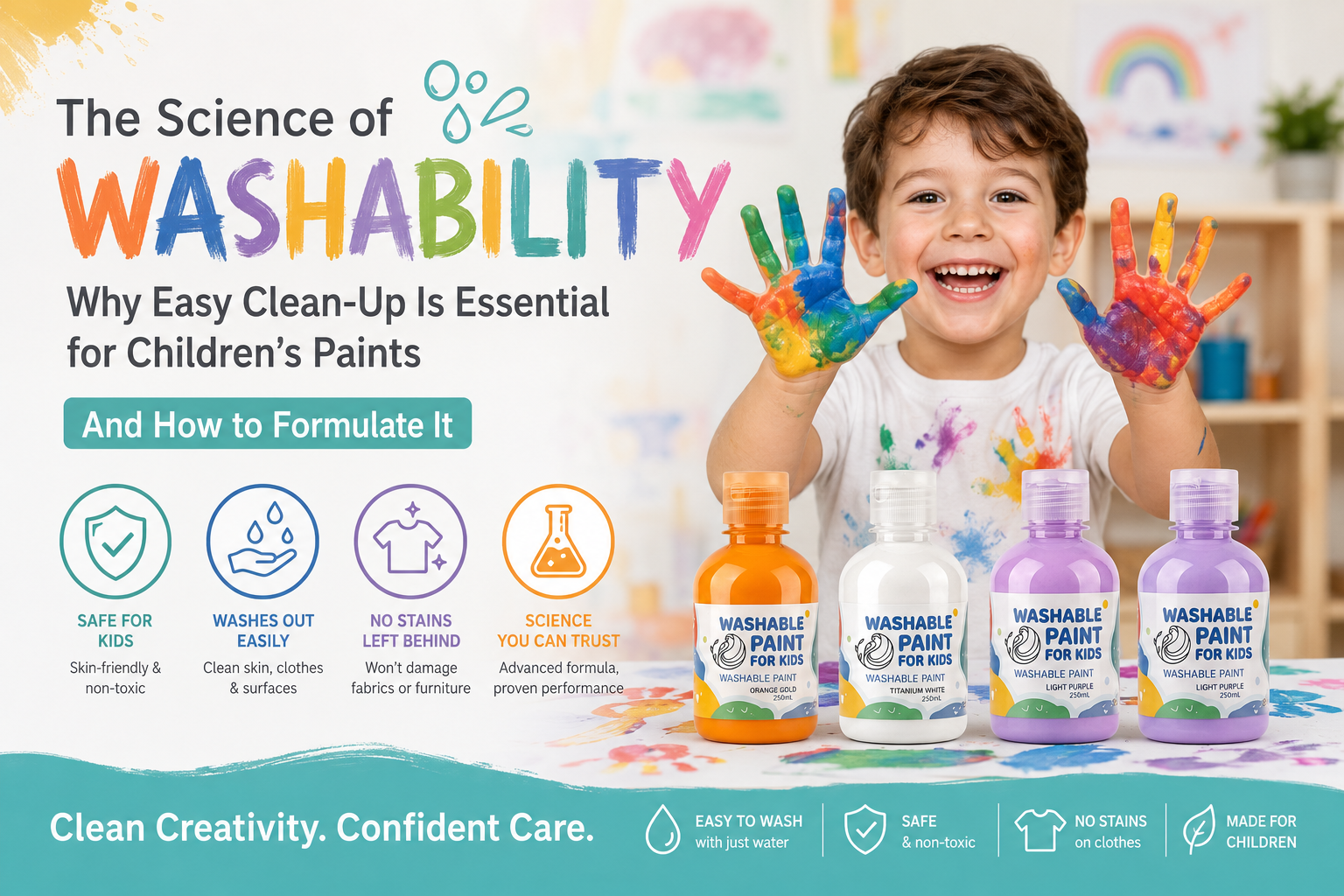
Una guía técnica sobre la química de formulación de alta hidrofilicidad, la dispersión de pigmentos y el cumplimiento internacional de normas de seguridad.
I. Por qué la «lavabilidad» es un requisito ineludible en las pinturas para niños
1. La contaminación de la piel y la ropa es la norma, no la excepción
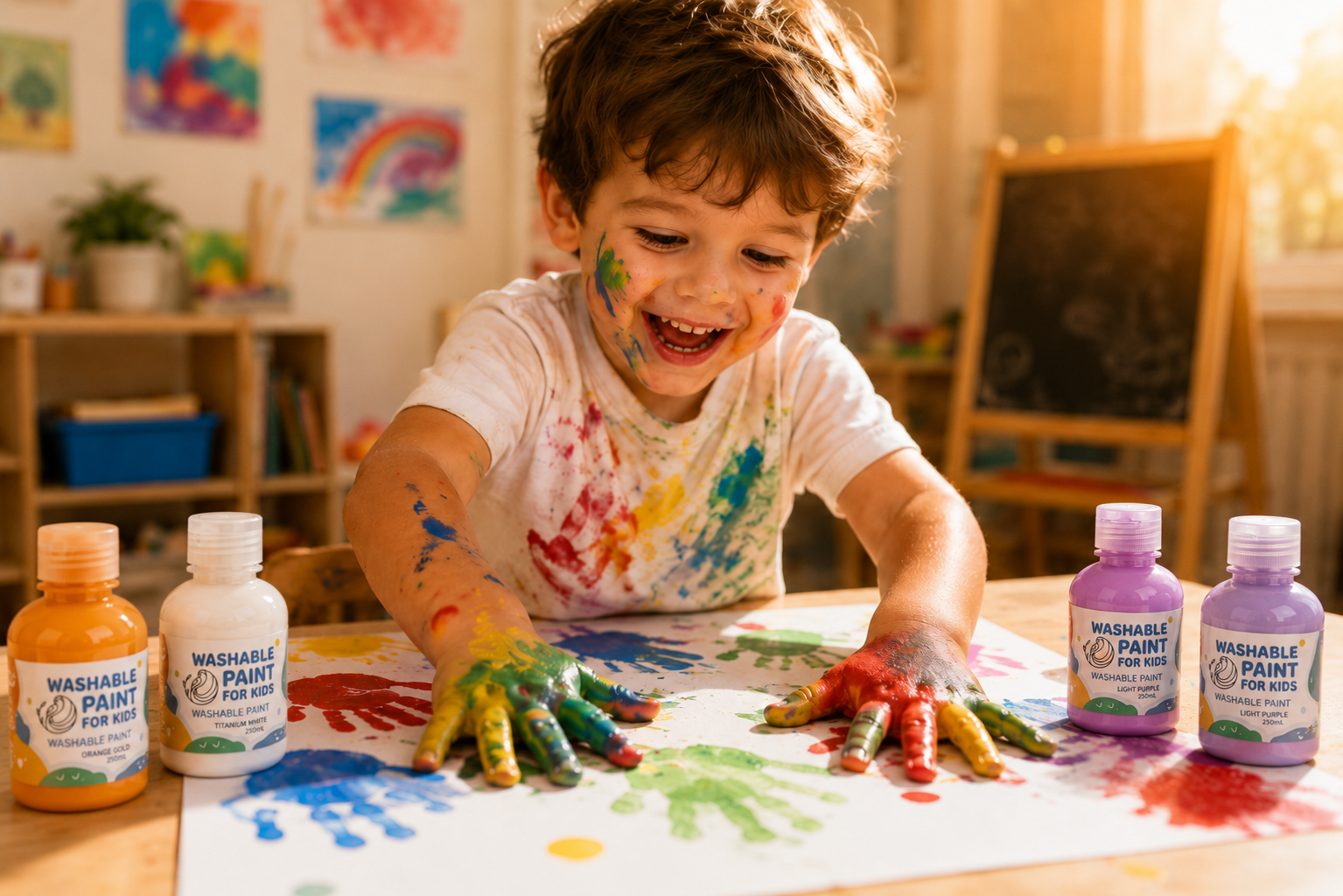
En escenarios típicos de pintura con los dedos, los niños aplican la pintura directamente con las manos. Como resultado, el color no solo queda en el papel, sino también en los dedos, las palmas, los antebrazos, la cara y la ropa. Los niños de 3 a 12 años aún están desarrollando sus habilidades motoras finas, lo que significa que la limpieza recae casi por completo en los padres y los educadores. La facilidad con la que una pintura se enjuaga determina directamente si los adultos permitirán a los niños usar nuevamente el producto.
2. Los residuos generan múltiples riesgos para la salud y la propiedad
Si la pintura no se puede eliminar de forma completa y rápida, introduce varios peligros distintos:
- · Irritación cutánea y alergias: El contacto prolongado de la piel con pigmentos agresivos o aglutinantes puede causar enrojecimiento, picazón o dermatitis de contacto.
- · Ingestión oral: Las manos sin lavar que tocan alimentos conducen directamente a la ingestión accidental de residuos químicos dejados sobre la piel.
- · Daños permanentes en el hogar: Las manchas irreversibles en la ropa, las alfombras y los muebles generan frustración y provocan reseñas negativas sobre la marca.
3. Normas reguladoras y de ensayo en evolución
La protección al consumidor cada vez más considera la lavabilidad como una característica básica de seguridad, y no como un beneficio comercial opcional. La Administración Estatal para la Regulación del Mercado recomienda expresamente a los padres que prioricen las pinturas para dedos lavables, debido a su menor perfil de residuos. Además, referencias normativas como la norma de ensayo para acuarelas infantiles (QB/T 5517-2020) incluyen la «lavabilidad» como un ítem de ensayo independiente y obligatorio para cumplimiento.
II. Principios de la química de las pinturas lavables
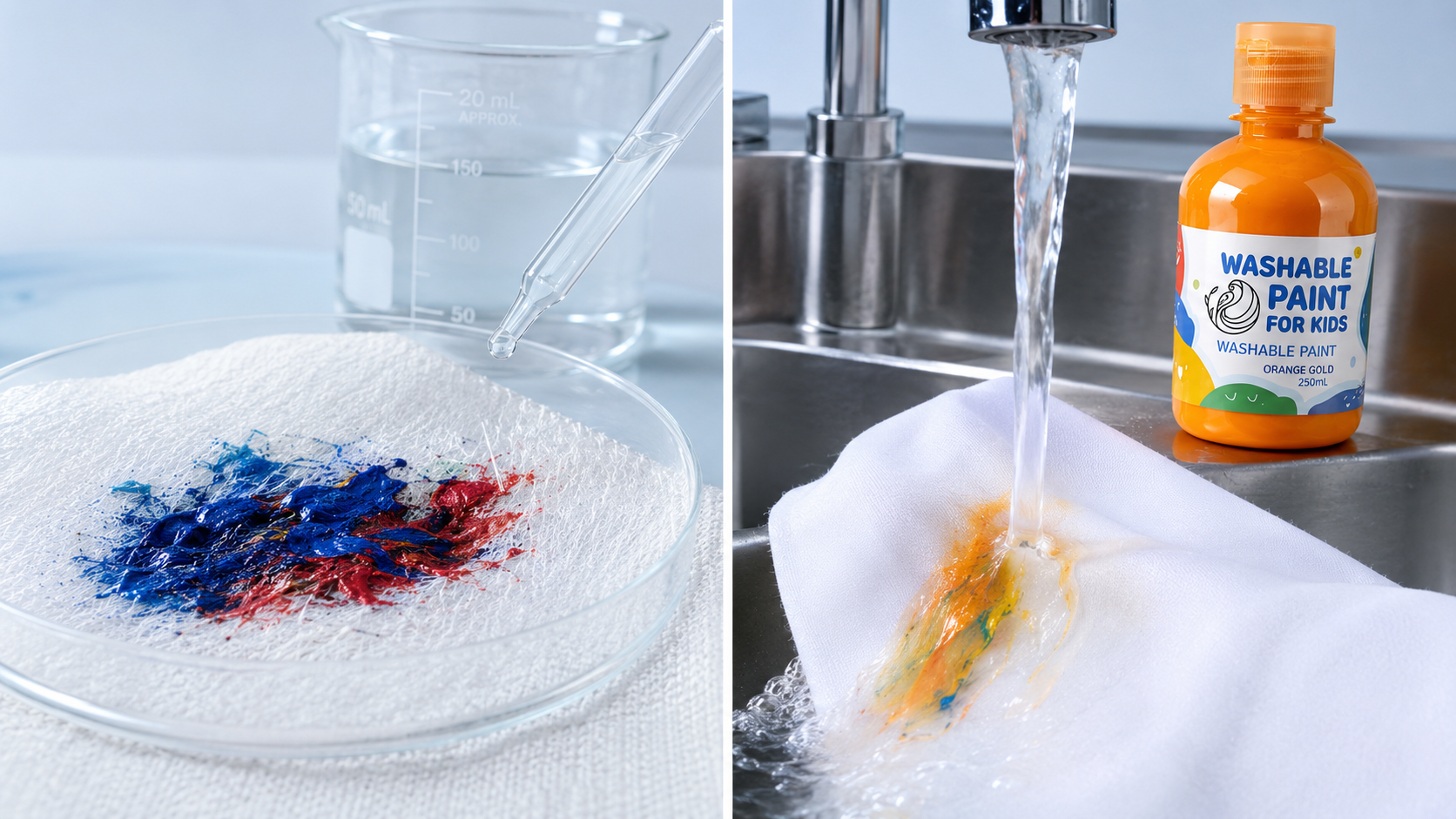
La filosofía de diseño fundamental detrás de las pinturas infantiles genuinamente lavables se basa en una alta hidrofilicidad y dispersabilidad en agua dentro de la matriz formadora de película.
- · Selección de la resina formadora de película: Las formulaciones deben sustituir los aglutinantes permanentes (como los acrílicos estándar) por goma arábiga modificada, resinas sintéticas solubles en agua o materiales a base de dextrina (por ejemplo, dextrina amarilla obtenida mediante hidrólisis del almidón). Antes del secado, estos compuestos se dispersan instantáneamente al entrar en contacto con el agua; tras el secado, se ablandan y se desprenden de las fibras con agua tibia y una ligera fricción.
- · Sistemas de tensioactivos dirigidos: La incorporación de tensioactivos no iónicos específicos —como el éter de tridecilo polioxietileno (12)— reduce la tensión interfacial entre la matriz de pintura y la piel o las fibras textiles, permitiendo que el agua se deslice debajo de la película de pintura y la desprenda.
- · Equilibrio reológico: La fórmula debe mantener una viscosidad suficiente para adherirse a los dedos y deslizarse suavemente sobre el papel, sin excesiva viscosidad que atrape profundamente los pigmentos en la trama textil.
III. Soluciones de producción: marco de formulación y proceso
Marco de formulación recomendado
| Función del componente | Dosis (p/p %) | Materias primas típicas | Finalidad técnica |
|---|---|---|---|
| Basado en disolventes | Saldo al 100 % | Agua desionizada | Base líquida pura, libre de iones metálicos. |
| Espesante principal | 1,0 % – 5,0 % | Hidroxietilcelulosa (HEC) | Proporciona cuerpo suave y suspensión. |
| Modificador reológico | 1,0 % – 5,0 % | Espesante acrílico hinchable en medio alcalino | Controla la estructura en gel y la estabilidad del flujo. |
| Agente fundamental para la lavabilidad | 3,0 % – 8,0 % | Éter de tridecilo polioxietileno (12) | Tensioactivo no iónico que reduce la adhesión superficial. |
| Base colorante | 0,1 % – 2,0 % | Pasta colorante predispersa | Base polimérica dispersante para pigmentos que no forman grumos. |
| Cargador y agente extensor | 0,1 % – 5,0 % | Arcilla caolínica/carbonato cálcico | Mejora la opacidad y la sensación táctil suave. |
| De espumadores | 0,1 % – 2,0 % | Antiespumante a base de aceite mineral | Elimina burbujas de aire durante la mezcla a alta velocidad. |
| Conservante | 0,01 % – 1,0 % | Conservantes de grado cosmético | Evita el crecimiento bacteriano durante la vida útil del producto. |
| Agente disuasorio para la ingestión | 0,0001 % – 0,001 % | Benzoato de denatonio | Su amargor extremo evita la ingestión accidental. |
Principales pasos de producción
- Preparación de la fase acuosa: Calentar agua desionizada hasta la temperatura indicada y añadir, de forma secuencial y con agitación constante, hidroxietilcelulosa (HEC), modificadores reológicos y tensioactivos, hasta que se hidraten completamente y la mezcla sea homogénea.
- Dispersión de la pasta de color: Los pigmentos deben pretriturarse utilizando dispersantes poliméricos, agentes humectantes no iónicos y disolventes alcohólicos. Este paso evita la aglomeración de los pigmentos y garantiza una aplicación uniforme del color, sin rayas.
- Mezcla del compuesto: Mezcle lentamente la pasta de color preparada en la fase acuosa. Añada cargas, antiespumantes, conservantes y el agente amargante, removiendo hasta lograr una mezcla completamente homogénea.
- Estabilización antimoho: Incorpore agentes antimoho específicos (0,01 %–0,03 %) para asegurar estabilidad a largo plazo durante el almacenamiento en almacén y su uso por parte del consumidor.
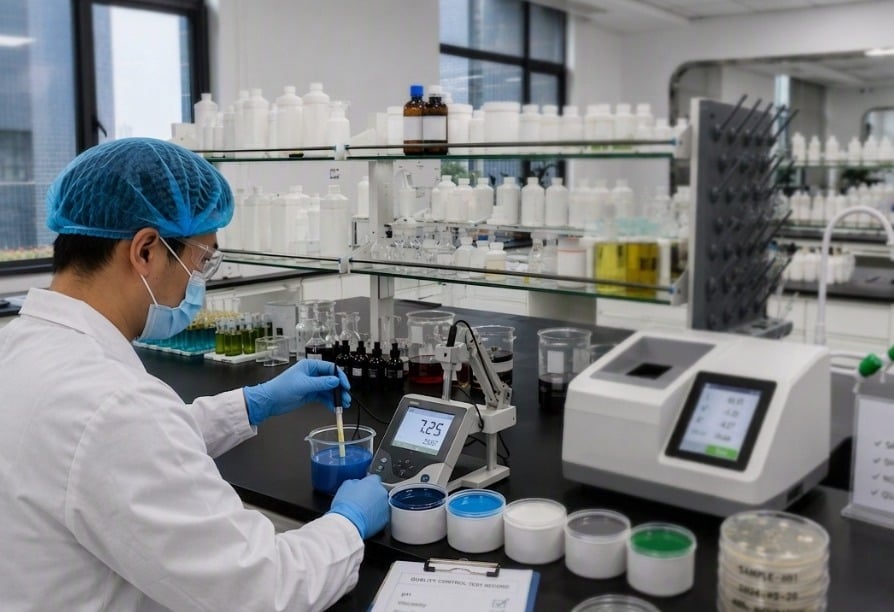
- calibración de pH y viscosidad: Neutralice la mezcla hasta alcanzar un rango de pH seguro para la piel (6,5–7,5) y ajuste la viscosidad final para obtener una consistencia cremosa y sin goteo.
IV. Normas de control de calidad y cumplimiento
Cada lote de producción destinado a niños debe superar rigurosamente una batería internacional de referencias de seguridad y rendimiento:
- · Pruebas de lavabilidad: Pruebas de lavado estandarizadas en algodón, poliéster y mezclilla según las normas QB/T 5517-2020 y EN71-7.
- · Migración de metales pesados: Cumplimiento estricto de los límites de metales pesados según las normas GB 6675.1 y EN71-3 (análisis de plomo, cadmio, bario, arsénico, etc.).
- · Auditoría de conservantes: Los niveles de conservantes (como BIT/MIT o sorbato potásico) deben permanecer rigurosamente dentro de los límites máximos de seguridad reglamentarios para evitar riesgos de sensibilización.
- · Pruebas de vida útil y estabilidad: Pruebas térmicas y microbianas aceleradas garantizan que los productos no se degraden, se separen ni desarrollen bacterias durante su vida útil declarada.
La lavabilidad va mucho más allá de una simple comodidad; es una métrica de ingeniería fundamental que equilibra la ciencia de la seguridad, la experiencia del usuario y la ingeniería química. Elevar la lavabilidad al mismo nivel que la no toxicidad permite crear productos que potencian la creatividad infantil y, al mismo tiempo, generan la confianza duradera de padres y educadores.
¿Listo para adquirir pinturas artísticas premium lavables?
Formulada con matrices avanzadas de aglutinantes solubles en agua y componentes no tóxicos de grado cosmético, nuestra gama de pinturas lavables cumple rigurosos estándares de seguridad y garantiza una limpieza sencilla de la piel y las telas.
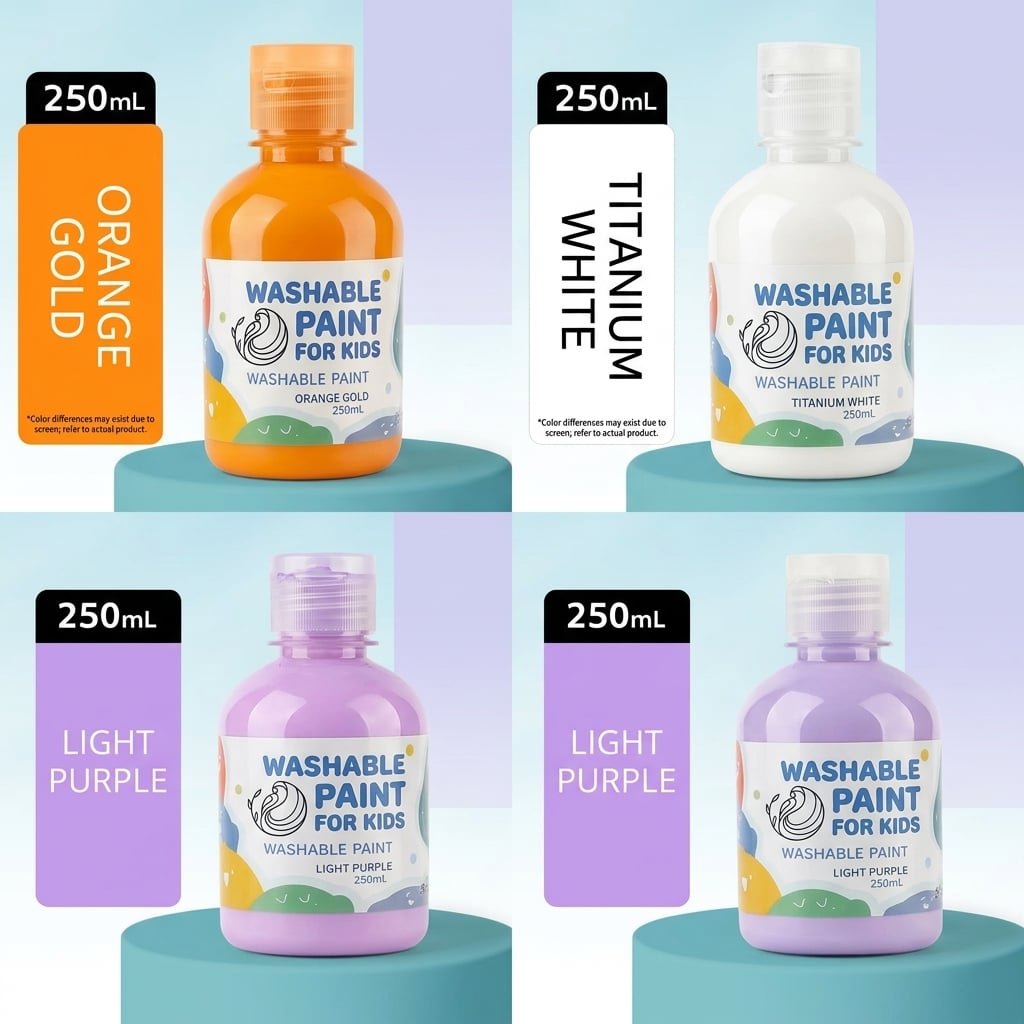
Tabla de contenidos
- Una guía técnica sobre la química de formulación de alta hidrofilicidad, la dispersión de pigmentos y el cumplimiento internacional de normas de seguridad.
- I. Por qué la «lavabilidad» es un requisito ineludible en las pinturas para niños
- II. Principios de la química de las pinturas lavables
- III. Soluciones de producción: marco de formulación y proceso
- IV. Normas de control de calidad y cumplimiento