
 EN
EN
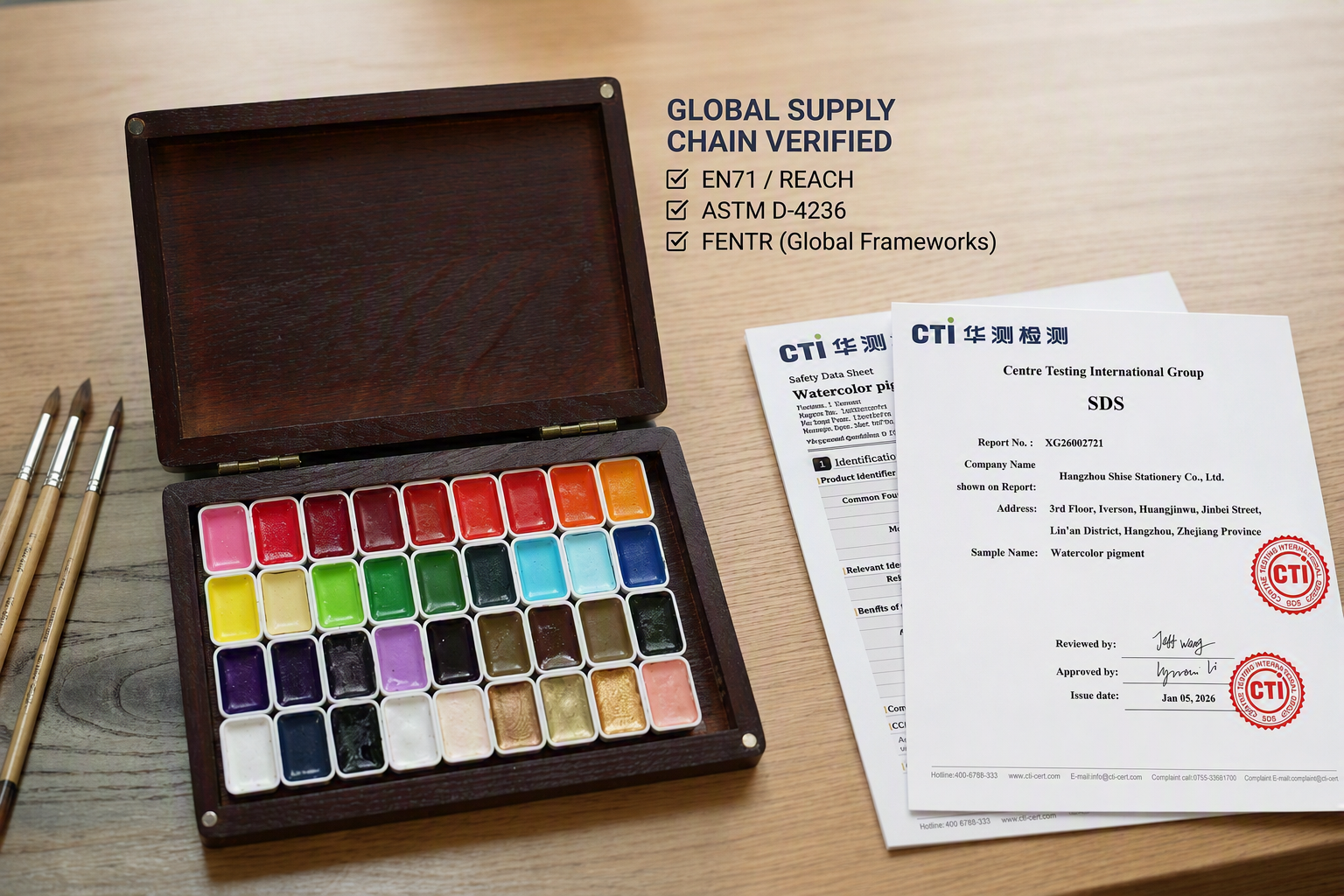
In international sourcing, product quality and competitive pricing mean nothing without verified regulatory compliance. Here is how meeting standards upfront closes deals faster.
In international B2B procurement, product quality, competitive pricing, and slick marketing presentations often dominate initial sales conversations. However, experienced buyers in the commercial art supply and fine chemical industries know a simple truth: without regulatory compliance, none of those things matter.
Certification isn't just an administrative box to check at the end of a deal—it is the initial filter that determines whether a global buyer will even entertain a conversation with your facility.
The Unspoken Barrier in International Sourcing
When global brands, educational institutions, or retail chains source custom art materials—such as watercolor sets, acrylics, or finger paints—they aren't just purchasing pigment and packaging. They are taking on legal responsibility for product safety in their target markets.
For procurement directors managing international supply chains, an uncertified product represents enormous risk:
Customs Detentions
Shipments seized at destination ports due to non-compliance with regional chemical regulations or missing test documentations.
Product Recalls
Costly market withdrawals and penalties if products fail post-import safety audits (e.g., heavy metal contamination or unauthorized preservatives).
Brand Damage
Irreparable reputational harm and loss of consumer trust if products intended for children fail toxicity and safety standards.
Because of these high stakes, procurement managers use international safety certifications as an immediate risk-filtering mechanism before diving into price negotiations or sample evaluations.
A Recent Case in Point: How Compliance Closed the Deal
Last year, a major European distributor reached out to our team looking to develop a custom private-label watercolor collection. The project was substantial, representing an initial run of over 50,000 units across multiple regional retail channels.
During our initial consultation, we walked through our technical capabilities: custom pan molding, automated multi-pass drying, pigment dispersion techniques, and flexible packaging options. The client was visibly interested, but their purchasing director remained cautious, taking notes quietly.
About twenty minutes into the meeting, he paused the technical discussion and asked directly:
"Before we go any further into specs and pricing—do you have full REACH certification and updated EN71-3 testing reports for every raw material in this palette?"
I didn't hesitate. I pulled up our compliance portfolio and presented our current REACH registration documents along with third-party testing documentation from accredited laboratories.
The shift in the room was immediate. The client didn't ask for a price discount or an extended trial period. Seeing that our chemical formulations were already fully vetted and compliant for European import, he signed a letter of intent on the spot to lock in production capacity for the quarter.
What could have been weeks of back-and-forth risk assessment was resolved in minutes—simply because the compliance foundation was already rock solid.
The Essential Certifications Every B2B Art Supply Sourcing Team Looks For
If you are sourcing or manufacturing private-label art products, these are the core regulatory standards that serve as mandatory entry tickets into key global markets:
EN71 & REACH Compliance
- EN71 Series (EN71-1, -2, -3, -7): Ensures mechanical safety, flammability standards, heavy metal migration limits, and mandatory bittering agents in finger paints.
- REACH Compliance: Guarantees chemical substances and raw pigments comply with strict European Union health and environmental safety restrictions.
ASTM D-4236 & CPSIA
- ASTM D-4236 (LHAMA): Mandatory toxicological evaluation confirming art materials are properly labeled for chronic health hazards.
- CPSIA: Consumer Product Safety Improvement Act enforcing strict lead and phthalate limits for children's products.
ISO 8124 Safety Standard
- ISO 8124: International toy safety standard widely recognized across South America, Asia, and Oceania for toxicological and mechanical safety compliance.
In B2B trade, speed is built on trust, and trust is built on verified compliance. When you remove regulatory uncertainty upfront, price and capability conversations become remarkably straightforward.
Have your clients asked you about certification during your initial sales calls? What regulatory hurdles do you see most often in your market? Let's discuss in the comments below! ?
Looking for Full REACH & EN71-3 Compliant Art Supply Manufacturing?
Partner with Poezie Color for certified, custom private-label watercolors, acrylics, and art sets built for seamless global export to EU, US, and international markets.
Table of Contents
- In international sourcing, product quality and competitive pricing mean nothing without verified regulatory compliance. Here is how meeting standards upfront closes deals faster.
- The Unspoken Barrier in International Sourcing
- A Recent Case in Point: How Compliance Closed the Deal
- The Essential Certifications Every B2B Art Supply Sourcing Team Looks For