
 EN
EN
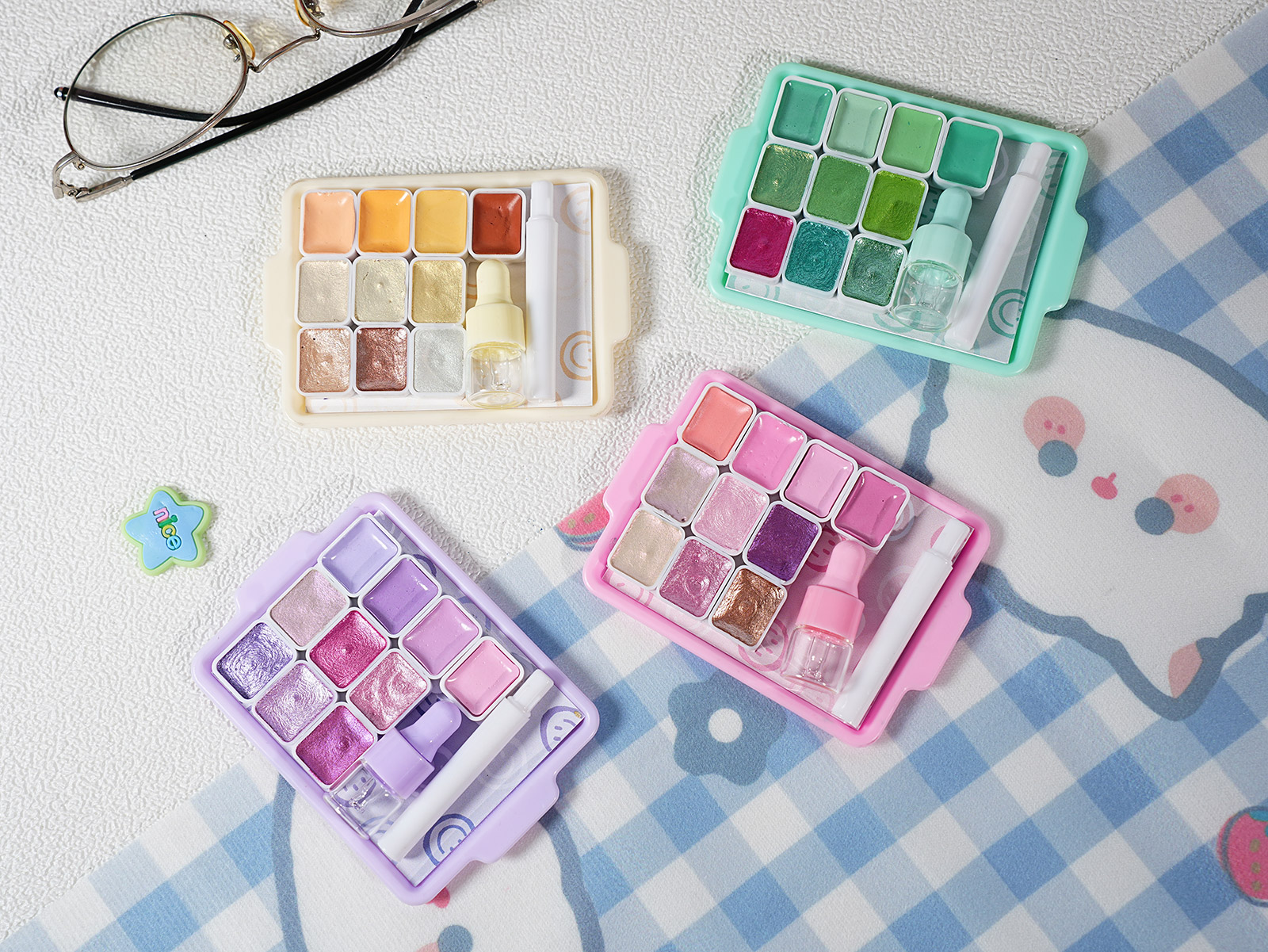
Understanding Watercolor Transparency: Pigment Types and Performance
How Pigment Chemistry Influences Watercolor Transparency and Opacity
What makes a pigment look transparent or opaque comes down to its chemical makeup and how it plays with light. Take those clear watercolors we know as Quinacridones – they work their magic thanks to tiny organic molecules measuring around 0.1 to 1 micron in size. These little guys stick fast to paper fibers, letting light travel right through several paint layers without getting blocked. On the other end of the spectrum, paints like Cadmium have bigger, bumpier particles ranging from 2 to 5 microns across. When light hits these uneven surfaces, it bounces all over the place instead of passing straight through, which gives them that characteristic chalky look artists often seek for certain effects. Most serious painters will tell you about ASTM standards for transparency ratings, though only about three quarters of top quality paints actually print these details on their tubes according to industry reports.
Common Transparent Watercolor Pigments: Quinacridone, Phthalo Blue, and Transparent Yellow
Three pigments dominate transparent watercolor applications:
- Quinacridone Rose (PR 122): Creates luminous glazes without muddying underlying layers
- Phthalo Blue (PB 15:3): Offers intense color saturation with 90% light transmission in lab tests
- Transparent Yellow (PY 153): Maintains clarity even when layered 4–5 times
These pigments account for 62% of transparent watercolor sales among professional artists, according to 2023 pigment usage surveys.
Transparency Levels in Watercolor Paints: Grading Systems Used by Manufacturers
Leading manufacturers use standardized codes to indicate transparency:
| Symbol | Transparency Level | Light Transmission | Common Uses |
|---|---|---|---|
| T | Transparent | 80–95% | Glazing, washes |
| ST | Semi-Transparent | 50–79% | Mid-layer details |
| SO | Semi-Opaque | 20–49% | Textured effects |
| O | Opaque | 5–19% | Final accents |
Examples of Highly Transparent Watercolor Paints: Quinacridone Gold and Phthalo Blue
Quinacridone Gold (PO 49) lets a surprising amount of light through when mixed, around 87% according to lab tests done on different brand versions. The Phthalo Blues aren't far behind either, especially the PB 15:6 type which lets through nearly 91% of light as shown in recent material testing from last year. Artists love these colors because they stay strong even after multiple watercolor washes, sometimes up to twelve or more without breaking down. That's why many botanical illustrators and landscape painters reach for them when building up layers of color depth in their work.
How to Identify Transparent Watercolor Paints: Labels and Simple Testing Methods
Reading Manufacturer Labels: Symbols and Terms Indicating Transparency
Most watercolor brands have developed their own systems to show how transparent different colors are. When shopping around, check the packaging for those little icons - usually squares. An open square means the color will let light through nicely, great for washes and layering techniques. The solid black square tells us we're looking at something more opaque, which works well when covering mistakes or creating bold areas. Some brands mark semi-transparent options with partially filled squares or X marks across them. Alongside these symbols, many tubes will also list words such as Transparent, Semi-Transparent, or Opaque right next to the pigment code. For serious artists who want their work to last decades without fading, paying attention to ASTM ratings matters a lot. Colors rated I or II hold up much better against sunlight exposure compared to lower rated alternatives, making all the difference between a painting that stays vibrant and one that gradually loses its brilliance over time.
Testing Paint Transparency Using the Black Marker Method
This hands-on technique reveals true transparency levels:
- Draw bold black lines on watercolor paper
- Apply undiluted paint across the lines
- Transparent pigments will let 80–90% of the underlying lines show through
- Semi-transparent varieties obscure 30–50% of lines
- Opaque paints fully cover the marker
Water Rinse Test: Assessing Pigment Transparency on Wet Paper
Wet your paper thoroughly and apply concentrated paint. Transparent pigments will:
- Show visible paper texture
- Allow light to reflect through pigment layers
- Create glowing effects rather than flat coverage
For quick verification, rinse your brush in clean water after use. Transparent pigments like burnt sienna leave water clear, while opaque varieties such as iron oxide red create cloudy solutions within 15–20 seconds.
Why Watercolor Paint Fades: The Role of Lightfastness and Pigment Stability
What Is Lightfastness and How It Affects Watercolor Paint Longevity
The ability of watercolor pigments to stand up against fading light is what we call lightfastness. Most manufacturers rate their colors according to industry standards, usually giving them grades from I (very stable) all the way down to III (likely to fade). Take Alizarin Crimson for instance this beautiful red tends to start losing its punch pretty quickly if left in direct sun, whereas earth tones such as Raw Umber can keep their rich color for many years. Anyone concerned about their artwork lasting wants to look for paints marked with Lightfastness I or II ratings. Some recent research into pigment durability suggests that good quality archival watercolors might only lose around 10% of their original color strength over fifty years provided they're kept away from harsh lighting conditions.
Effect of Sunlight on Watercolor Paintings: UV Degradation of Organic Pigments
When ultraviolet light hits organic pigments in paints, it actually breaks apart the molecular bonds, leading to colors that just won't come back once they fade away. Studies show that around three quarters of all color loss problems in watercolor paintings happen because of too much UV exposure. Take Phthalo Blue for instance - even though it looks so vibrant and clear, this particular pigment tends to break down about forty percent quicker when exposed to regular sunlight compared with those heavier mineral based paints. The best bet? Keep watercolor artwork away from window areas unless there's special glass installed that blocks out most of the harmful UV rays.
Industry Paradox: High Transparency Often Correlates With Lower Lightfastness in Certain Pigments
Transparency in paint comes at a cost to how well colors hold up over time. When pigments are ground finer or made with dyes instead of traditional materials, they tend to fade faster in sunlight. Take Quinacridone Gold for example this transparent yellow fades about twice as quickly compared to the more opaque Yellow Ochre when both sit in the same room near a window. Paint companies try to work around this issue by tweaking their binding agents, but anyone planning serious artwork that needs to last decades should always check those lightfastness ratings on the back of the tube before buying transparent colors for important pieces.
Best Practices to Prevent Watercolor Paint from Fading
Framing Watercolor Paintings with UV-Protective Glass to Block Harmful Rays
Studies on art preservation show that around 80 percent of color loss in organic pigments comes from exposure to ultraviolet radiation. For serious protection, museum quality glass with at least 97 percent UV blocking capability works best against those harmful wavelengths under 400 nanometers. Such glass stops nearly all UVB and most UVA radiation while letting through about 92 percent of regular visible light. This balance matters a lot when trying to keep bright transparent colors intact over time, especially for delicate shades like Quinacridone Gold which can fade so easily but still needs proper lighting conditions for accurate viewing.
Choosing Archival-Quality Paper and Mounting Materials for Long-Term Stability
Opt for acid-free paper with a pH ≥8.5, as acidic substrates accelerate pigment breakdown. Pair with aluminum or metal frames over wood to prevent acidic off-gassing. Tests show 100% cotton paper maintains structural integrity for 120+ years versus 20–30 years for wood-pulp blends.
Optimal Storage Conditions: Avoiding Humidity, Heat, and Direct Sunlight
For storing unframed pieces, flat files work best when combined with those little silica gel packs that help control moisture levels around 40 to 50 percent relative humidity. The room should stay at a comfortable temperature range too, somewhere between 18 and 21 degrees Celsius or about 65 to 70 Fahrenheit if we're talking Fahrenheit. When it comes to lighting, try not to let anything get hit by more than 10,000 lux of light intensity. That's basically what happens when sunlight filters through a north facing window indirectly. And don't forget to switch up where the artwork is placed on display roughly every three to six months. This helps distribute the light damage evenly across all surfaces and keeps everything looking good for longer periods of time.
Frequently Asked Questions (FAQ)
What is the difference between transparent and opaque watercolors?
Transparent watercolors allow light to pass through, revealing the colors beneath, and are ideal for layering and glazing. Opaque watercolors block light, providing solid coverage.
How can I test the transparency of watercolor paints?
You can use the black marker method: draw black lines on watercolor paper, apply the paint, and observe how much of the line is visible through the paint. Transparent paints will let most of the line show through.
Why do some watercolor paints fade over time?
The fading of watercolor paints is usually due to exposure to sunlight, which causes the organic pigments to degrade. Using UV-protective glass and archival-quality materials can help prevent fading.
Table of Contents
-
Understanding Watercolor Transparency: Pigment Types and Performance
- How Pigment Chemistry Influences Watercolor Transparency and Opacity
- Common Transparent Watercolor Pigments: Quinacridone, Phthalo Blue, and Transparent Yellow
- Transparency Levels in Watercolor Paints: Grading Systems Used by Manufacturers
- Examples of Highly Transparent Watercolor Paints: Quinacridone Gold and Phthalo Blue
- How to Identify Transparent Watercolor Paints: Labels and Simple Testing Methods
- Reading Manufacturer Labels: Symbols and Terms Indicating Transparency
- Testing Paint Transparency Using the Black Marker Method
- Water Rinse Test: Assessing Pigment Transparency on Wet Paper
- Why Watercolor Paint Fades: The Role of Lightfastness and Pigment Stability
- Best Practices to Prevent Watercolor Paint from Fading
- Frequently Asked Questions (FAQ)